
Centers of competence - Technology Platforms
Technology Platforms for Interdisciplinary Research
The LL&M Department’s competnece centers bring together scientific expertise, state-of-the-art research infrastructure, and methodological expertise in key technology areas. They serve as shared platforms for interdisciplinary projects involving researchers from various disciplines and form the backbone of the research building’s infrastructure.
The close networking of the centers of excellence gives rise to new experimental approaches that investigate materials and biological systems across various scales—from atomic structures to complex functional processes.
Six LL&M Technology Platforms
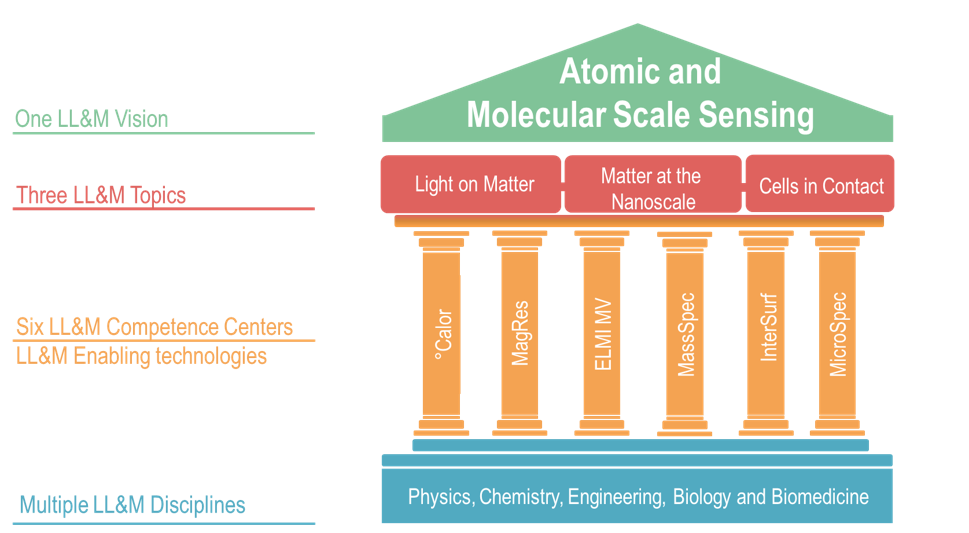
The Competence Centres—Technology Platforms—combine scientific expertise with state-of-the-art research infrastructure and lay the technological groundwork for the department’s three research areas.
Together, they form the foundation for the LL&M’s vision of analyzing, understanding, and harnessing materials and biological systems at the atomic and molecular levels.
Electron Microscopy - ELMI-MV
Imaging matter at atomic resolution.
The Competence Center brings together state-of-the-art electron microscopy techniques for high-resolution structural and materials analysis. It enables investigations ranging from atomic structure to the three-dimensional characterization of complex materials.
Key Areas
- High-resolution electron microscopy down to the atomic scale
- Structural and crystal analysis using electron diffraction
- Three-dimensional characterization of materials and nanostructures
- Chemical and structural analysis at the nano- and atomic scales
Correlative microscopy and method development
Mass Spectrometry -MassSpec
Molecular information through high-resolution mass analysis.
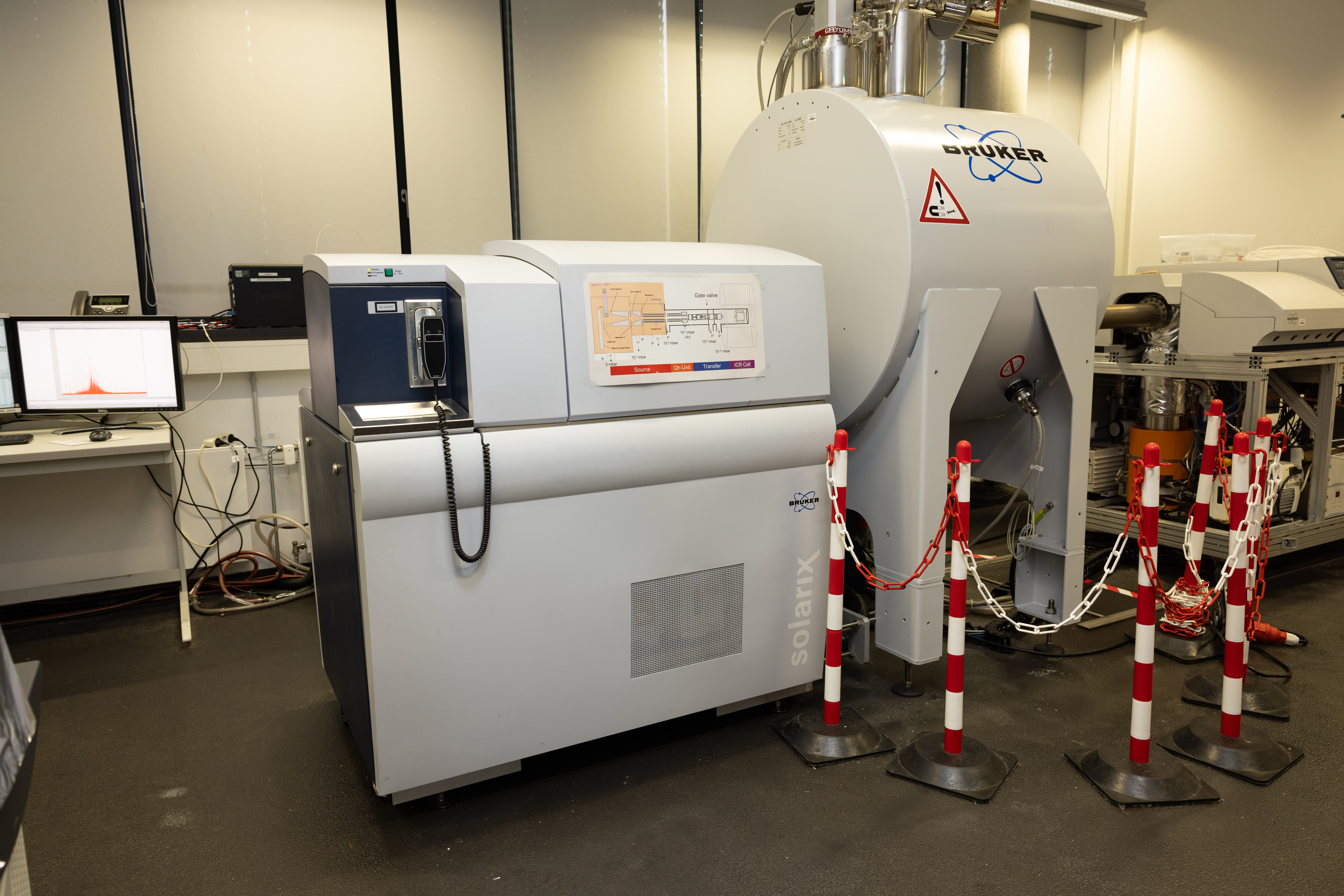
The Competence Center develops and uses state-of-the-art mass spectrometry techniques to analyze complex molecules and molecular processes.
Key Areas
- High-Resolution Mass Spectrometry for Molecular Analysis
- Ion Mobility Spectrometry for Structural Elucidation
- Imaging Mass Spectrometry (Imaging MS)
- Proteomics and Metabolomics
- Development of Innovative Mass Spectrometric Methods
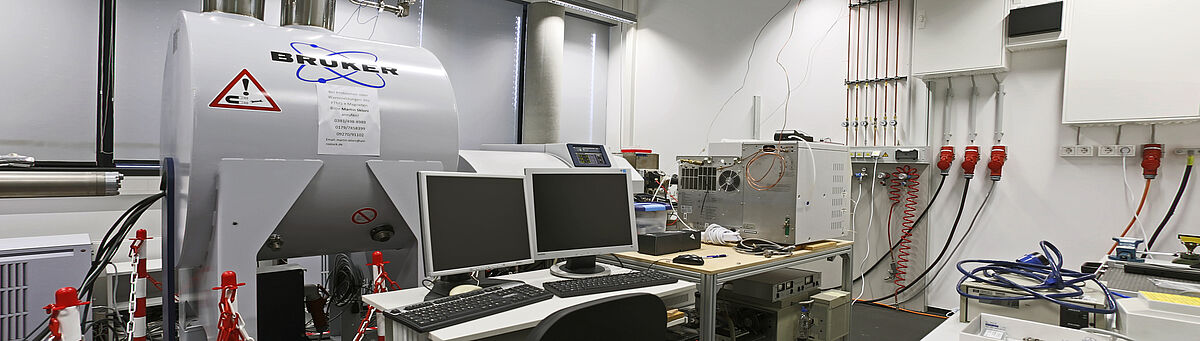
Nuclear Magnetic Resonance - MagRes
Understanding molecular structure and dynamics.
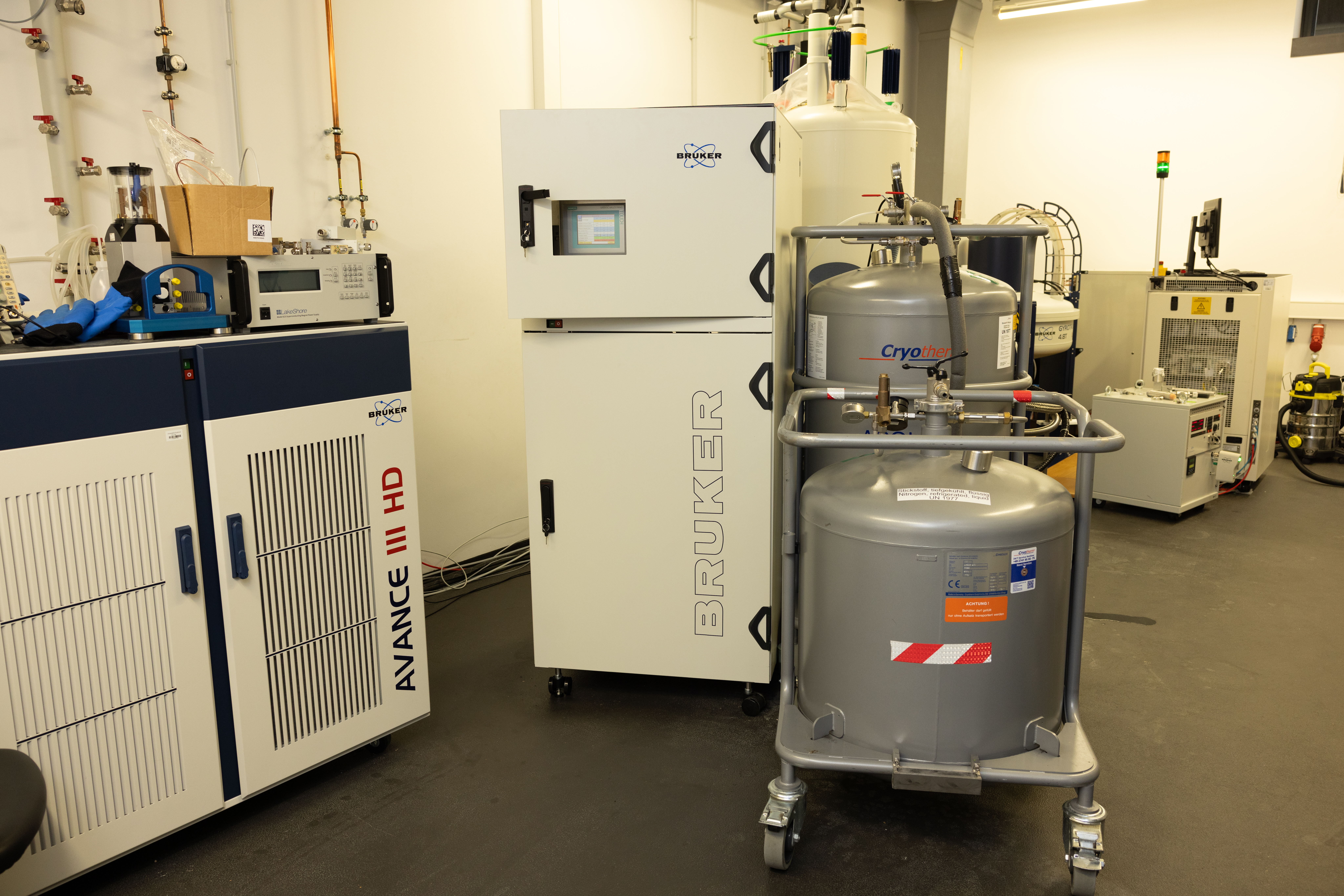
The MagRes Competence Center uses state-of-the-art NMR methods to study materials and biological systems. It provides insights into atomic structures, molecular dynamics, and molecular interactions.
Key Areas
- Solid-State NMR Spectroscopy
- Dynamic Nuclear Polarization (DNP)
- Molecular Structure and Dynamics Analysis
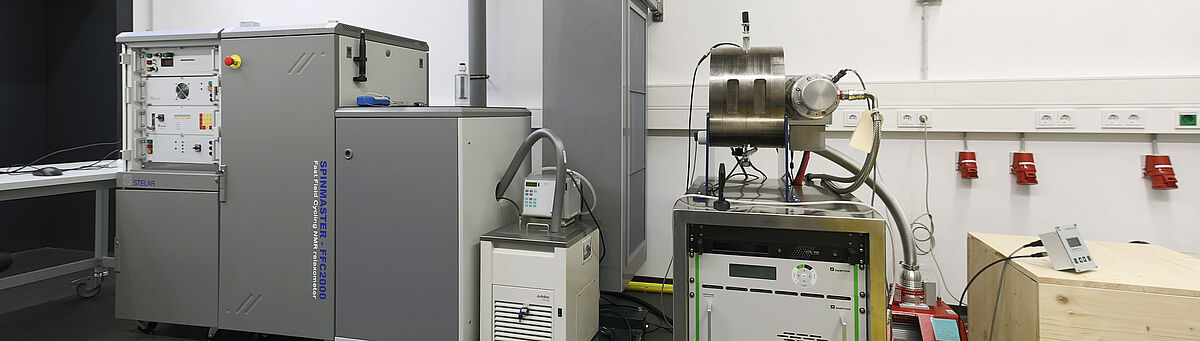
- Relaxometry and Molecular Mobility
- Materials for Energy, Catalysis, and Functional Applications
- Biomaterials and Biological Solids
- Method Development for Modern NMR Techniques
Optical Microscopy & Spectroscopy - MicroSpec
Visualizing biological and material processes.
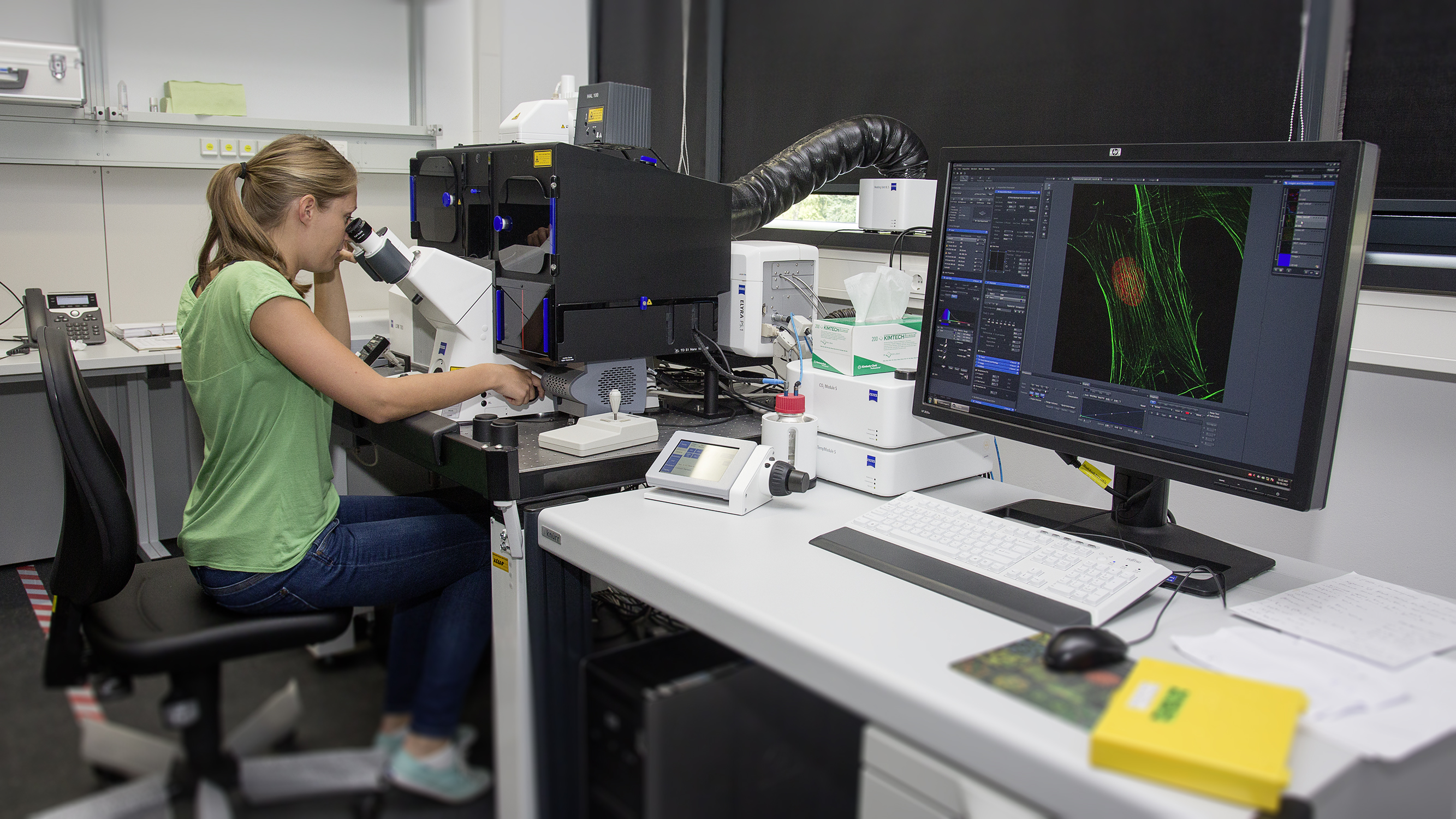
The MicroSpec Competence Center combines modern optical microscopy and spectroscopy for the study of materials and biological systems. It enables high-resolution visualization as well as time- and space-resolved analysis of dynamic processes—from individual molecules to complex cellular structures.
Key Areas
- High-Resolution Light Microscopy
- Fluorescence and Lifetime Microscopy (FLIM)
- Super-Resolution Microscopy
- Time-Resolved Spectroscopy
- Cell and Tissue Analysis
- Imaging Method Development
Interfaces & Surfaces - InterSurf
Understanding Functional Interfaces at the Nanoscale
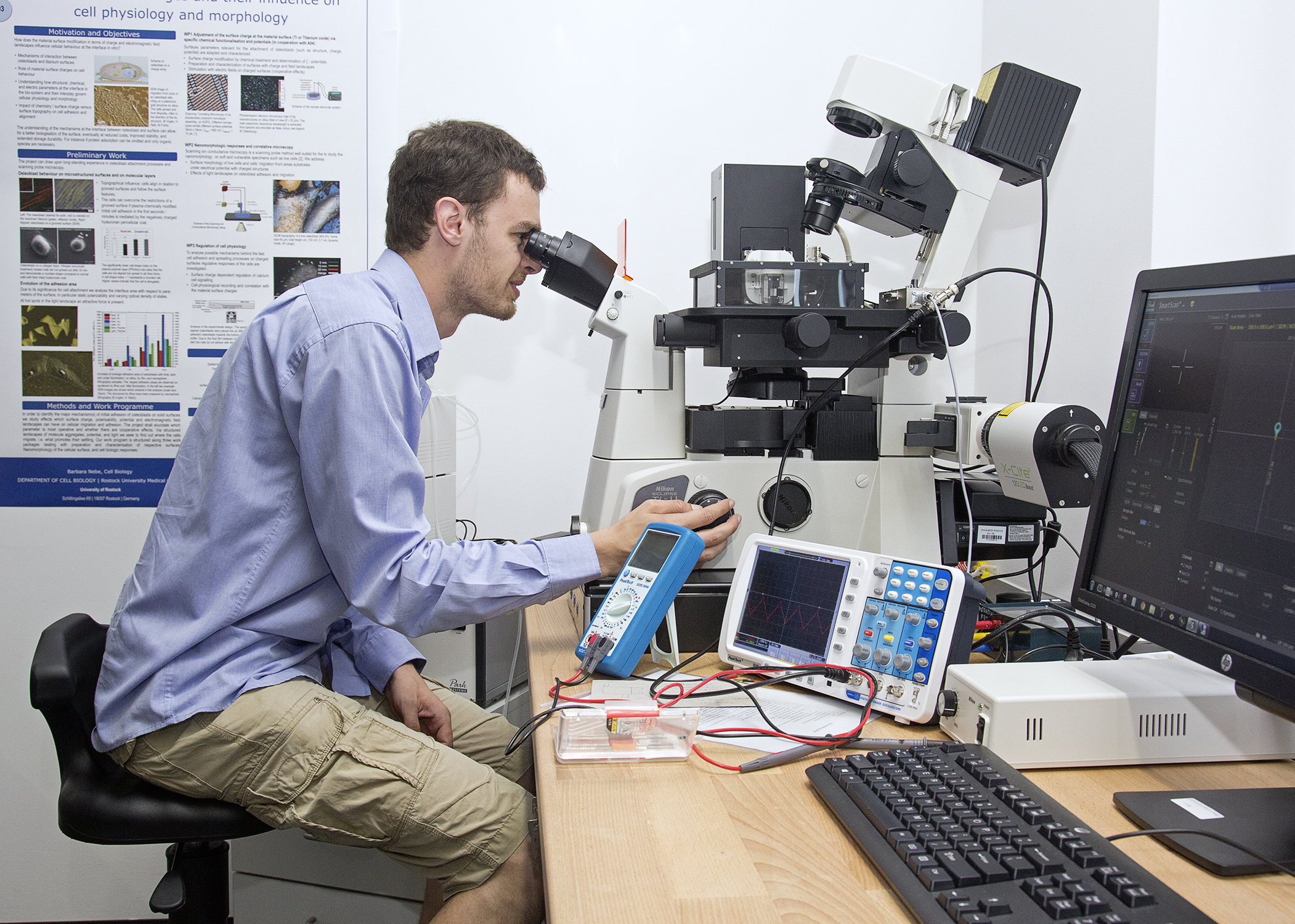
The InterSurf Competence Center studies interfaces and surfaces that significantly determine the behavior of modern materials and biological systems. The goal is to characterize and specifically influence physical, chemical, and mechanical properties on the nano- and micrometer scales.
Key Areas
- Scanning Probe Microscopy
- Surface and Interfacial Characterization
- Nanostructuring and Nanomanipulation
- Mechanical and Electrical Material Properties
- Biointerfaces
- Method Development for Surface Analysis
Calorimetry & Thermal Analysis - °CALOR
Understanding Materials through Thermal Properties
Das Kompetenzzentrum °CALOR bündelt modernste Methoden der Kalorimetrie und Thermoanalyse zur Untersuchung thermischer Eigenschaften und Phasenumwandlungen von Materialien. Die Plattform unterstützt die Entwicklung und Optimierung funktionaler Werkstoffe sowie das Verständnis ihrer Struktur-Eigenschafts-Beziehungen.
Schwerpunkte
- Kalorimetrie (DSC, Fast Scanning Calorimetry)
- Thermische Analyse
- Phasenumwandlungen
- Werkstoffcharakterisierung
- Thermophysikalische Materialeigenschaften
- Methodenentwicklung für thermische Analyse
Stronger Together
The competence centers do not operate independently of one another but complement each other methodologically. Many research projects combine multiple technologies to examine scientific questions from different perspectives.
The close integration of electron microscopy, mass spectrometry, NMR, microscopy, surface analysis, and thermal analysis creates a research environment that goes far beyond the capabilities of individual instruments and supports the vision of the Department of Atomic and Molecular Scale Sensing.