
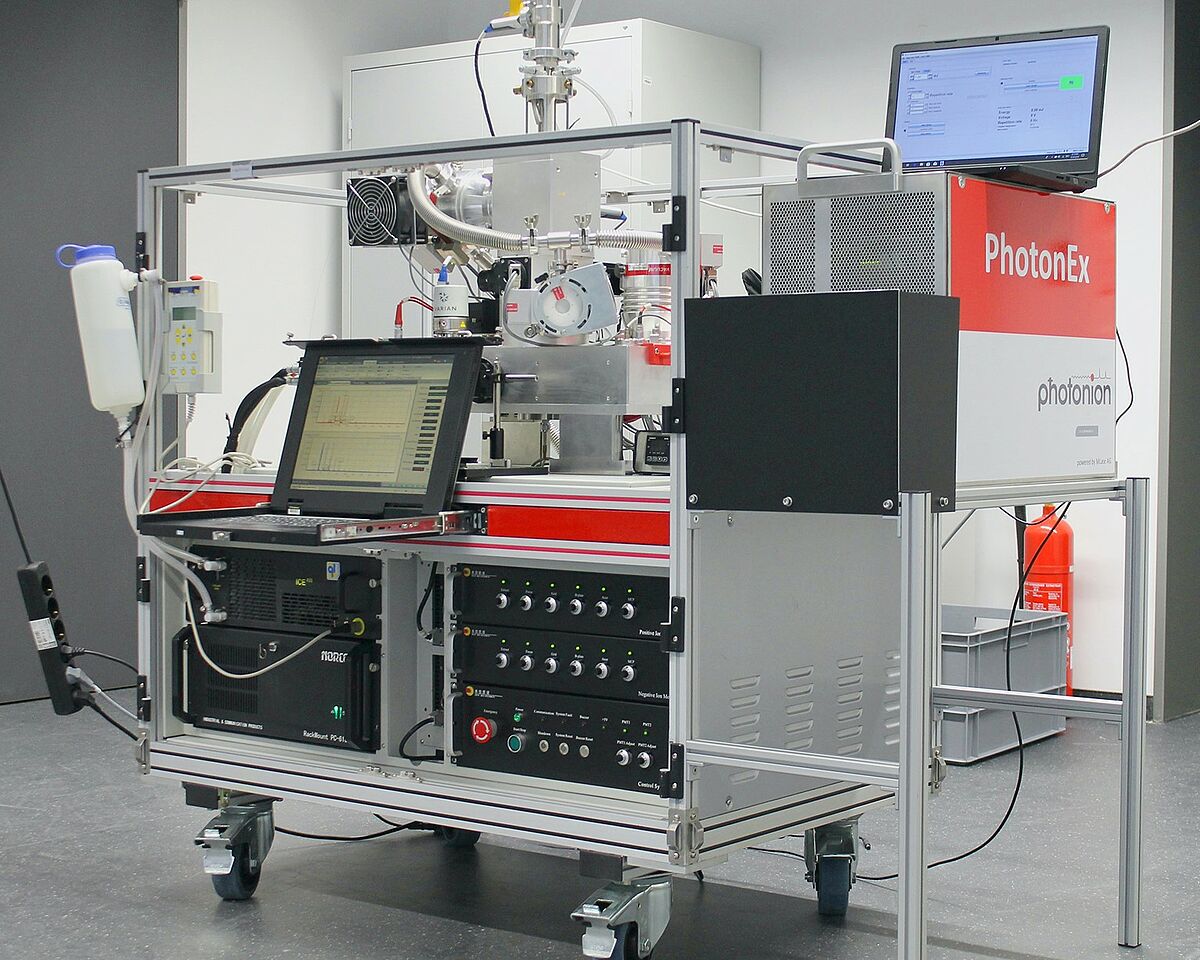
Fine particles emitted by combustion engines can penetrate deep into the respiratory system and potentially cause adverse health effects. But how do their properties change after remaining in the atmosphere for several days? An international research team led by the University of Basel, with contributions from the University of Rostock, has investigated this question. The findings have been published in the scientific journal Environmental Science: Atmospheres.
Scientists from the research group of Prof. Dr. Ralf Zimmermann at the Institute of Chemistry, University of Rostock, contributed to the study. The group is part of the Department Life, Light & Matter (LL&M). Rostock-based co-authors also include Dr. Thorsten Streibel, Dr. Martin Sklorz and Dr. Hendryk Czech.
How Aircraft Emissions Change During Atmospheric Ageing
The researchers analysed particulate emissions from a small aircraft jet engine and a marine diesel engine. Using a photochemical reactor at the University of Rostock, they simulated the atmospheric ageing of these emissions under controlled conditions over a period of up to twelve days.
A particular focus was placed on the oxidative potential of the particles, which describes their ability to trigger oxidative reactions that may contribute to cellular damage and inflammatory processes.
The results revealed significant differences between the two emission sources. While the oxidative potential of the investigated marine diesel emissions remained largely stable, that of the aircraft emissions increased considerably during atmospheric ageing. This increase is associated with chemical transformation processes driven by sunlight and atmospheric constituents.
New Insights into the Health Risks of Air Pollution
The study demonstrates that assessing the potential health risks of particulate emissions requires more than analysing freshly emitted particles. Chemical transformations occurring during atmospheric transport must also be taken into account.
The research highlights the importance of interdisciplinary and international collaboration in understanding complex environmental processes. Through its expertise in analytical chemistry and the characterisation of combustion emissions, the Zimmermann research group at LL&M contributes to a better understanding of atmospheric pollutants and their potential health impacts.
Scientific Publication
Alexandre Barth, Battist Utinger et al. (2026): Online characterisation of oxidative potential and reactive oxygen species of fresh and aged aircraft turbine and ship engine particulate emissions.
Environmental Science: Atmospheres, 6, 1629–1638.
DOI: https://doi.org/10.1039/D5EA00174A
Further Information
University of Basel – News, 15 October 2026:
https://www.unibas.ch/de/Aktuell/News/Uni-Research/feinstaub-flugzeugabgase-alterung-toxizitaet.html